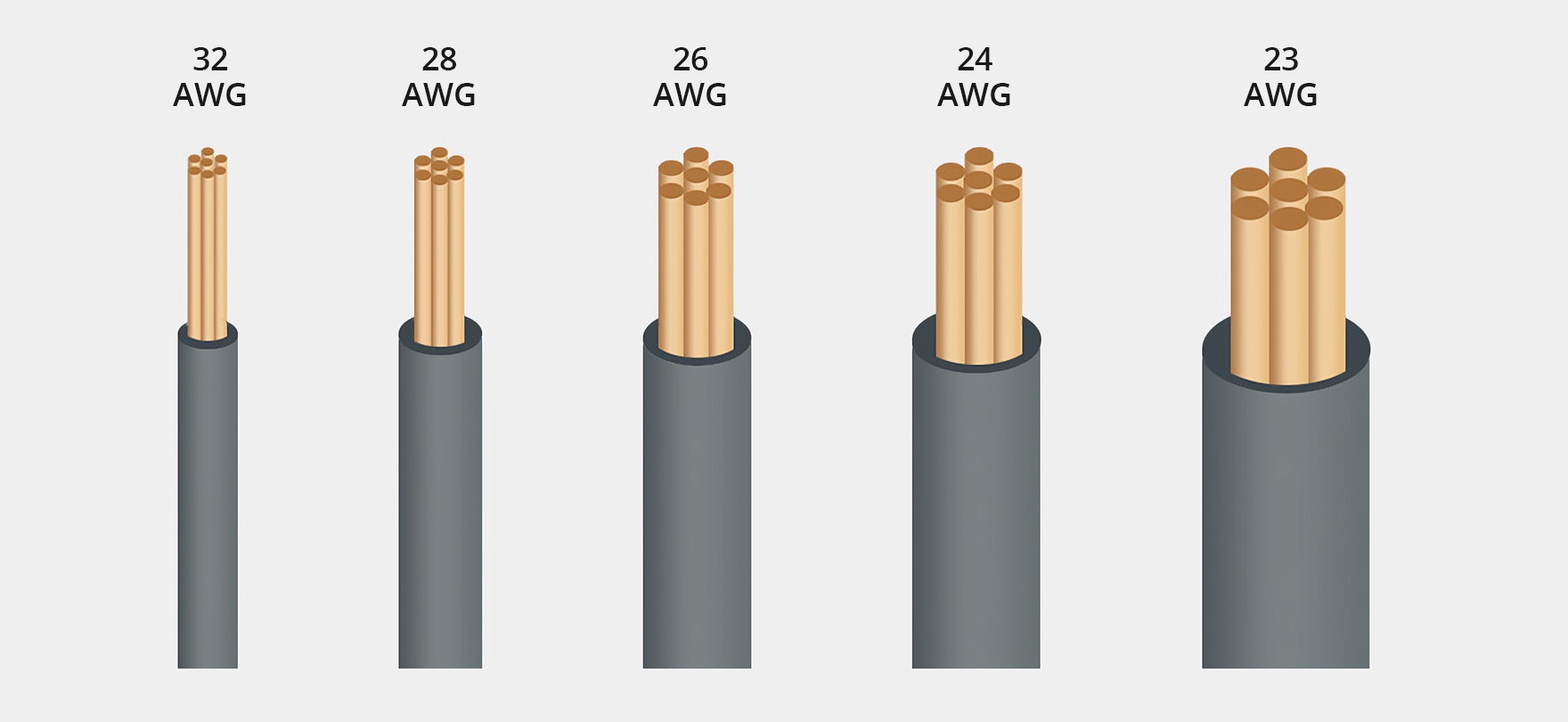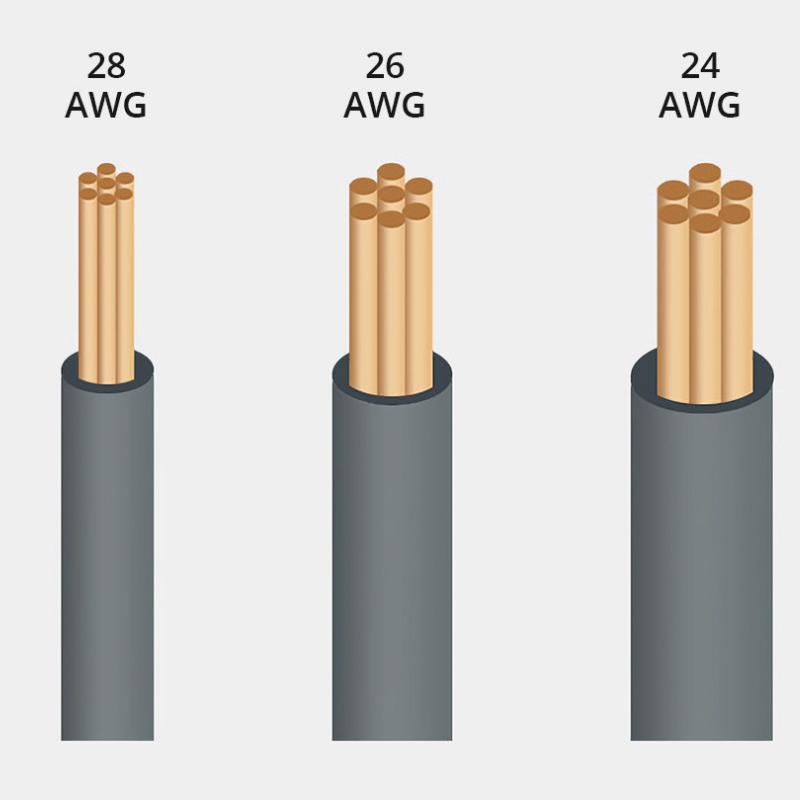
The gauge of a copper cable refers to the thickness of its conductor, typically measured using the American Wire Gauge (AWG) system. Smaller AWG numbers indicate thicker wires, which offer lower resistance and better current-carrying capacity. Conversely, higher AWG numbers correspond to thinner conductors, which are more flexible but may slightly reduce signal performance over long distances.
In networking, selecting the right gauge of copper Ethernet cables depends on the required bandwidth, cable length, and installation environment. For example, 24 AWG is often preferred for data centers where maximum signal integrity is critical, while 28 AWG cables provide higher flexibility for tight or dense cabling setups. We offers copper patch cords with a variety of gauge options, allowing network designers to balance performance, flexibility, and durability.